San Salvador Times
The Pulse of El Salvador’s Transformation
Saturday, May 23, 2026
San Salvador Times

0:00
0:00
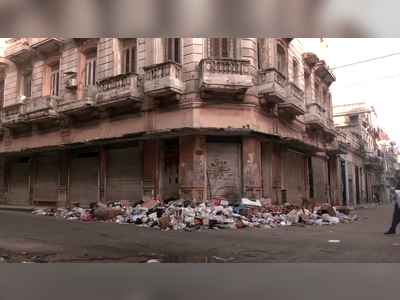
The Impact of U.S. Sanctions on Cuba's Humanitarian Crisis: A Tightening Noose
As the U.S. intensifies economic pressure, Cuba faces unprecedented humanitarian challenges, raising ethical questions about the impact on innocent citizens.
The current humanitarian crisis facing Cuba, exacerbated by U.S. sanctions, marks a significant issue in global politics.
The harsh consequences of these sanctions are not only diplomatic tools but also instruments causing widespread suffering among innocent civilians.
Cuba's economic structure, heavily reliant on oil imports and tourism, is now on the brink of collapse as vital supplies dwindle.
This situation questions the morality and justification behind collective punishment strategies deployed against a nation in deep political turmoil.
What we can confirm is that the U.S. government's actions, particularly under the previous administration, have cut off vital resources that once sustained Cuba's economy.
The cessation of oil imports, largely influenced by U.S. geopolitical interests in Venezuela, has created an energy crisis.
This spectrum of economic strain escalated into food shortages and health crises as critical services like hospitals face operational challenges due to a lack of fuel and resources.
Mechanically, the sanctions function through systematic removal of trade and financial channels that once enabled Cuba's government to manage its economy.
The U.S. aims to suffocate the regime by denying it revenue from tourism and remittances, intending to force political concessions.
This approach disregards the humanitarian impact on ordinary Cubans, who bear the brunt of these policies while the political elite may remain insulated from the crisis.
The real incentives driving U.S. policy reveal a complex landscape dominated by ideological opposition to the Cuban government.
Legislators, notably those with Cuban-American heritage, argue for a complete withdrawal of support to accomplish regime change.
This stance, however, operates within a troubling ethical framework that prioritizes political outcomes over human lives.
Stakeholder leverage appears skewed in this scenario, with the Cuban government dependent on limited international support against a backdrop of crippling sanctions.
On the other side, U.S. lawmakers, advocating for tougher measures, feel no economic repercussions themselves, allowing them to disregard the humanitarian fallout.
Competitive dynamics further aggravate the situation.
As Cuba spirals into economic despair, rival external players could exploit this vulnerability, potentially increasing their influence in the Caribbean at Cuba's expense.
The lack of substantive reforms within Cuba makes the matter complex, laying bare the political and economic deficiencies while simultaneously affecting the populace's daily existence.
The tragedy lies in the interplay between domestic need for reform and external pressures that continually disable such processes.
Scenarios around the evolving crisis suggest multiple pathways.
A base case would see the Cuban government navigate through this turmoil, managing shortages with extreme resourcefulness, possibly achieving limited reforms under pressure.
On a bullish scenario, if significant international players, like the European Union, step in to offer humanitarian aid, it might alleviate the immediate suffering but would simultaneously undermine U.S. political objectives.
Conversely, in a bearish view, escalating humanitarian crises could ignite mass discontent, leading to larger regional instability that could foment further sanctions and military responses by the U.S.
What to watch in this developing situation includes:
- Changes in U.S. policy on sanctions.
- Humanitarian responses from international organizations.
- Shifts in the Cuban government’s stance on reforms.
- Increased emigration trends from Cuba.
- Public protests within Cuba against government policies.
- Diplomatic engagements with other nations regarding Cuba.
- Food supply levels in local markets.
- Fuel availability and power supply disruptions in urban areas.
- Healthcare service capacity amid shortages.
- Impacts of regional geopolitical shifts on Cuba.
- Response from Cuban Americans to the humanitarian crisis.
- The evolution of U.S.-Latin America relations as a result of Cuban controversies.
- Adaptations in the Cuban economy to counter sanctions.
The harsh consequences of these sanctions are not only diplomatic tools but also instruments causing widespread suffering among innocent civilians.
Cuba's economic structure, heavily reliant on oil imports and tourism, is now on the brink of collapse as vital supplies dwindle.
This situation questions the morality and justification behind collective punishment strategies deployed against a nation in deep political turmoil.
What we can confirm is that the U.S. government's actions, particularly under the previous administration, have cut off vital resources that once sustained Cuba's economy.
The cessation of oil imports, largely influenced by U.S. geopolitical interests in Venezuela, has created an energy crisis.
This spectrum of economic strain escalated into food shortages and health crises as critical services like hospitals face operational challenges due to a lack of fuel and resources.
Mechanically, the sanctions function through systematic removal of trade and financial channels that once enabled Cuba's government to manage its economy.
The U.S. aims to suffocate the regime by denying it revenue from tourism and remittances, intending to force political concessions.
This approach disregards the humanitarian impact on ordinary Cubans, who bear the brunt of these policies while the political elite may remain insulated from the crisis.
The real incentives driving U.S. policy reveal a complex landscape dominated by ideological opposition to the Cuban government.
Legislators, notably those with Cuban-American heritage, argue for a complete withdrawal of support to accomplish regime change.
This stance, however, operates within a troubling ethical framework that prioritizes political outcomes over human lives.
Stakeholder leverage appears skewed in this scenario, with the Cuban government dependent on limited international support against a backdrop of crippling sanctions.
On the other side, U.S. lawmakers, advocating for tougher measures, feel no economic repercussions themselves, allowing them to disregard the humanitarian fallout.
Competitive dynamics further aggravate the situation.
As Cuba spirals into economic despair, rival external players could exploit this vulnerability, potentially increasing their influence in the Caribbean at Cuba's expense.
The lack of substantive reforms within Cuba makes the matter complex, laying bare the political and economic deficiencies while simultaneously affecting the populace's daily existence.
The tragedy lies in the interplay between domestic need for reform and external pressures that continually disable such processes.
Scenarios around the evolving crisis suggest multiple pathways.
A base case would see the Cuban government navigate through this turmoil, managing shortages with extreme resourcefulness, possibly achieving limited reforms under pressure.
On a bullish scenario, if significant international players, like the European Union, step in to offer humanitarian aid, it might alleviate the immediate suffering but would simultaneously undermine U.S. political objectives.
Conversely, in a bearish view, escalating humanitarian crises could ignite mass discontent, leading to larger regional instability that could foment further sanctions and military responses by the U.S.
What to watch in this developing situation includes:
- Changes in U.S. policy on sanctions.
- Humanitarian responses from international organizations.
- Shifts in the Cuban government’s stance on reforms.
- Increased emigration trends from Cuba.
- Public protests within Cuba against government policies.
- Diplomatic engagements with other nations regarding Cuba.
- Food supply levels in local markets.
- Fuel availability and power supply disruptions in urban areas.
- Healthcare service capacity amid shortages.
- Impacts of regional geopolitical shifts on Cuba.
- Response from Cuban Americans to the humanitarian crisis.
- The evolution of U.S.-Latin America relations as a result of Cuban controversies.
- Adaptations in the Cuban economy to counter sanctions.